
The Importance of On-Page SEO: How to Optimize Your Content
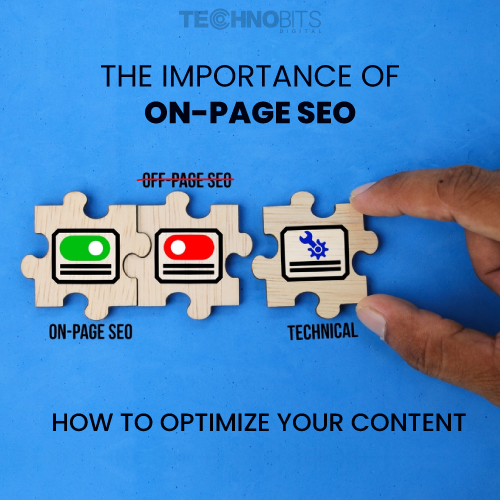
Discover the significance of on-page SEO and learn effective strategies to optimize your content for better search engine rankings, increased traffic, and enhanced user engagement.
In today's digital landscape, having a strong online presence is crucial for any business or individual looking to make an impact. One of the most effective ways to guarantee that the people you want to see on your website see it is through Search Engine Optimization (SEO). Among the various SEO techniques, on-page SEO is a fundamental aspect that focuses on tweaking specific websites to raise their search engine ranks and get more relevant traffic.
Understanding On-Page SEO
All the actions that can be done directly on the website to improve its position in search engine results are referred to as on-page SEO. This entails optimizing both the pages' HTML source code and content. Effective on-page SEO helps search engines understand your content, improve user experience, and ensure your website is seen as valuable and relevant by both search engines and users.
The Importance of On-Page SEO
- Enhanced User Experience: On-page SEO aims to provide users with valuable and interesting information. By making sure that your writing is logically organized, simple to read, and relevant, you can significantly enhance the user experience.
- Improved Search Engine Ranking: Search engines evaluate a webpage's quality and relevancy using various methods. On-page SEO can help search engines better comprehend your content, leading to higher rankings.
- Higher Click-Through Rates (CTR): Well-optimized meta descriptions and title tags can significantly improve your website's click-through rates. When users see a compelling and relevant snippet in the search results, they have a higher chance of clicking on your link.
- Increased Engagement and Conversions: Optimized content that is aligned with user intent can lead to higher engagement and conversions. By offering insightful content that caters to your audience's needs, you can establish authority and trust.
How to Make Your Content More SEO-Friendly
1. Keyword Research and Optimization
Start by performing in-depth keyword research. After you've chosen your keywords, carefully include them in your writing, including in the title, headings, meta descriptions, and throughout the body text. However, avoid keyword stuffing, which can lead to penalties from search engines.
2. Create High-Quality Content
Ensure your information is interesting, educational, and valuable. Your writing should respond to the concerns and inquiries of your readers, offering them practical advice and answers. Combine text, photos, videos, and infographics to make it more engaging.
3. Optimize Title Tags and Meta Descriptions
A succinct synopsis of the material should be included in the meta description, and the main keyword should be included in an attention-grabbing title tag. Both should be within the recommended character limits (usually 60 characters for title tags and 160 characters for meta descriptions).
4. Use Header Tags (H1, H2, H3)
Header tags aid in organizing your information and facilitate navigation for both people and search engines. For the page's main title, use the H1 tag; for subheadings, use the H2 and H3 tags.
5. Optimize Images
While graphics might enhance the user experience, search engine optimization is still necessary. Use alt text with meaningful keywords and illustrative file names. You can compress your photos to make them smaller in file size for faster loading.
6. Improve Page Load Speed
Maintaining user engagement and raising your search engine position both depend on having a website that loads quickly. To increase how quickly your page loads, simplify HTML, CSS, and JavaScript, optimize pictures, and make use of browser caching.
7. Internal Linking
Internal links aid search engines in deciphering the organization of your website and creating a significance hierarchy. They also keep users engaged by providing easy access to related content.
8. Mobile Optimization
Making sure the mobile version of your website is responsive is more crucial than ever. Make sure your website appears and functions properly on all devices, and test your mobile performance frequently to fix any problems.
Conclusion
A crucial component of successful on-page SEO is any SEO strategy. Your search engine rankings, user experience, and targeted traffic can all be increased by concentrating on optimizing your content and website structure. Put this blog's advice into practice to make sure your material is optimized for both users and search engines, and observe how your online visibility expands.