AI Chatbots: Improving Client Involvement with February 2024.
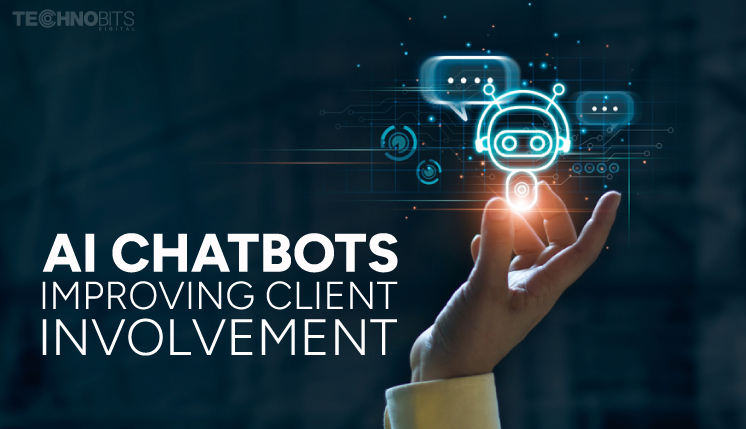
In February 2024, the customer experience landscape is set to undergo a groundbreaking shift as AI chatbots take centre stage. These intelligent virtual assistants are revolutionising how businesses interact with customers, boosting efficiency and personalisation like never before. Picture this: a seamless customer journey where queries are resolved instantly, round the clock, and without any wait time. It's a game-changer that will leave customers feeling heard, valued, and satisfied.
The Role of AI Chatbots in Enhancing Customer Experience
Artificial intelligence chatbots have become helpful for organisations hoping to give extraordinary client experience. These canny menial helpers are intended to comprehend and answer client questions, providing speedy and exact arrangements. By utilising normal language handling and AI calculations, computer-based intelligence chatbots can participate in human-like conversations, causing clients to feel like they are associating with genuine individuals.
One of the critical advantages of artificial intelligence chatbots is their capacity to offer instant help. Gone are the times of clients holding up in lengthy telephone lines or trusting that hours will get an email response. Artificial intelligence chatbots can handle various client questions. This recovery time as well as further develops consumer loyalty levels.
Moreover, artificial intelligence chatbots can personalise the client experience. Chatbots can provide custom-made suggestions, advancements, and offers by dissecting client data and purchase history. This degree of personalisation causes clients to feel valued and grasped, prompting increased steadfastness and repeat business.
Executing artificial intelligence chatbots can likewise prompt tremendous expense investment funds for organisations. Organisations can decrease the requirement for human specialists by mechanising client support processes, bringing about lower work costs. Computer-based intelligence chatbots can deal with a massive volume of inquiries without settling for less on quality, making them a savvy answer for organisations of all sizes.
Advantages of Involving artificial intelligence Chatbots in Client assistance
There are various advantages of utilising artificial intelligence chatbots in client assistance. Firstly, as mentioned earlier, AI chatbots provide instant support, eliminating wait times and improving response times. Customers no longer have to wait for business hours to have their queries addressed. AI chatbots are available 24/7, ensuring customer inquiries are resolved promptly, regardless of the time of day.
Moreover, AI chatbots can handle a large volume of queries simultaneously. Unlike human agents, who are limited by availability and capacity, chatbots can engage with multiple customers simultaneously. This scalability allows businesses to handle high-traffic periods without compromising on the quality of customer service.
Another significant benefit of AI chatbots is their ability to provide consistent service. Unlike human specialists with fluctuating degrees of information and skill, chatbots give normalised reactions in light of pre-modified data. This guarantees that clients get exact and consistent information without fail, no matter what the specialist is taking care of their query.
Moreover, Artificial intelligence chatbots can be prepared to gain from client interactions, improving their performance over time. Through AI algorithms, chatbots can examine designs in client questions and adjust their reactions accordingly. This continuous growing experience prompts further developed accuracy and consumer loyalty levels.
Examples of Successful AI Chatbot Implementations
Numerous businesses have embraced AI chatbots and witnessed significant improvements in their customer experience. Let's take a look at a few examples:
- Banking Industry: Banks have implemented AI chatbots to provide personalised and efficient customer service. These chatbots can assist with balance inquiries and transaction history and even provide financial advice. Customers can access their banking information and resolve queries instantly without the need to visit a physical branch or speak to a human agent.
- E-commerce: Online retailers have integrated AI chatbots into their websites and messaging platforms to offer real-time customer support. These chatbots can help with product recommendations, order tracking, and returns. By providing immediate assistance, e-commerce businesses can reduce cart abandonment rates and increase customer satisfaction.
- Hospitality: Hotels and travel agencies have deployed AI chatbots to handle customer inquiries and bookings. These chatbots can assist with room reservations, flight bookings, and recommendations for local attractions. Hotels can enhance customer experience and streamline booking by offering personalised assistance.
These are only a few instances of how simulated intelligence chatbots are effectively implemented across various industries. The possibilities are enormous, and organisations continuously find innovative ways to leverage this technology for enhanced customer experience.
How AI Chatbots Work
To comprehend how artificial intelligence chatbots work, getting a handle on the primary technologies that power them is fundamental. Artificial intelligence chatbots depend on regular language handling (NLP) and AI algorithms to comprehend and answer client questions.
Regular language handling enables chatbots to analyse and interpret human language, allowing them to comprehend the expectations and context of client inquiries. It includes breaking down sentences into parts, like nouns, verbs, and adjectives, and identifying their relationships. This enables the chatbot to provide essential and accurate responses.
AI algorithms play a critical role in preparing and improving computer-based intelligence chatbots. These algorithms enable chatbots to learn from enormous datasets and client interactions, continuously refining their reactions. Chatbots can adjust their responses after some time by analysing patterns and trends in client questions, working on their accuracy and understanding.
Chatbots also rely on an information base or database for accurate responses. This database is pre-programmed with relevant information, such as FAQs, product details, or troubleshooting guides. When a client's question is asked, the chatbot searches its knowledge base for the most appropriate reaction.
Moreover, computer-based intelligence chatbots can be integrated with different systems and databases within a business, allowing them to get real-time data. This integration enables chatbots to provide personalised recommendations, access account data, or perform specific tasks for the client's benefit. The blend of regular language handling, AI, and integration capabilities enables simulated intelligence chatbots to provide insightful and human-like client interactions.
Key Highlights to Search for in an AI Chatbot
When selecting an AI chatbot for your business, it's essential to consider the key features to enhance the customer experience.
- Natural Language Understanding: The chatbot should have advanced natural language understanding capabilities to interpret and respond to customer queries accurately. This includes the ability to understand context, sentiment, and intent.
- Personalisation: Look for a chatbot to personalise customer experience by leveraging customer data and preferences. This can include personalised recommendations, targeted promotions, or tailored responses based on past interactions.
- Integration Capabilities: Ensure the chatbot can integrate with your existing systems and databases. This allows the chatbot to access real-time information to perform tasks on behalf of the customer, such as checking order status or making reservations.
- Scalability: Please ensure that the chatbot solution is scalable. It should be able to handle a large volume of queries simultaneously without compromising on response times or quality of service.
- Analytics and Reporting: Look for a chatbot with analytics and reporting capabilities. This allows you to track customer interactions, identify trends, and measure the chatbot's effectiveness in improving customer experience.
Considering these key features, you can select an AI chatbot that aligns with your business goals and enhances the customer experience.
Best Practices for Implementing AI Chatbots
Implementing AI chatbots requires careful planning and execution.
- Set Clear Objectives: Determine what specific problems or challenges the chatbot will solve and how it will enhance the customer experience.
- Select the Right Platform: Choose a chatbot platform that aligns with your business needs and requirements. Consider factors such as scalability, integration capabilities, and ease of use.
- Train and Test: Train the chatbot using relevant data and scenarios. Test the chatbot extensively to ensure it understands and responds accurately to customer queries.
- Provide Seamless Integration: Integrate the chatbot with your existing systems and databases to provide a seamless customer experience. This includes ensuring that the chatbot has access to real-time information and can perform tasks on behalf of the customer.
- Offer Human Backup: AI Chatbots can handle a wide range of inquiries. However, there may be instances where they are unable to assist. Human intervention is required. Provide a seamless transition from the chatbot to a human agent when necessary to ensure a positive customer experience.
- Monitor and Improve: Monitor the chatbot's performance and gather user feedback. Use this feedback to make improvements and enhancements to the chatbot's capabilities.
Following these best practices, you can implement an AI chatbot that enhances the customer experience and delivers tangible business benefits.
Challenges and Limitations of AI Chatbots
While AI chatbots offer numerous benefits, they also come with their own set of challenges and limitations. It's essential to be aware of these limitations to set realistic expectations.
- Language Limitations: AI chatbots may need help understanding complex or nuanced language. They may misinterpret customer queries or provide inaccurate responses in certain situations.
- Lack of Emotional Intelligence: AI chatbots lack emotional intelligence and may be unable to understand or respond appropriately to customer emotions or sentiments. This can result in a less personalised and empathetic customer experience.
- Training and Maintenance: AI chatbots require continuous training and maintenance to stay up-to-date and accurate. This includes regularly updating the knowledge base, refining responses, and addressing any gaps in understanding.
- Security and Privacy Concerns: AI chatbots may handle sensitive customer information like personal details or financial data. Implementing robust security measures to protect customers is paramount to handling data responsibly and ensuring compliance with privacy regulations.
- Integration Challenges: Integrating AI chatbots with existing systems and databases can be complex, especially for businesses with legacy systems or multiple data sources. It's important to carefully plan and execute the integration process to ensure seamless connectivity and data flow.
Despite these challenges, AI chatbots continue to evolve and improve, and businesses are finding innovative ways to overcome these limitations.
Future Trends and Advancements in AI Chatbots
The future of AI chatbots looks promising, with advancements in technology and AI capabilities.
- Improved Natural Language Understanding: AI chatbots will improve your ability to comprehend and react to intricate language with excellent proficiency, including idioms, slang, and regional dialects. This will result in more accurate and contextual responses.
- Emotional Intelligence: Future chatbots will be equipped with the emotional intelligence capabilities to understand and respond to customer emotions and sentiments. This will lead to a more personalised and empathetic customer experience.
- Seamless Integration: AI chatbots will seamlessly integrate with a wide range of systems and databases, enabling them to access real-time information to perform complex tasks on behalf of the customer. This further enhances the efficiency and effectiveness of chatbot interactions.
- Multilingual Support: AI chatbots will be capable of providing support in multiple languages, breaking down language barriers and improving accessibility for customers worldwide.
- Voice-Enabled Chatbots: The rise of voice-enabled devices and smart speakers will lead to the development of voice-enabled AI chatbots.
As technology advances, AI chatbots will play an increasingly crucial role in enhancing the customer experience and driving business growth.
Conclusion
AI chatbots are transforming the customer experience landscape, offering businesses a powerful tool to enhance efficiency, personalisation, and customer satisfaction. While there are challenges, continuous technological advancements are addressing these issues, and the future looks promising with improved NLU and emotional intelligence on the horizon.