
Digital Marketing Analytics: How Businesses Can Measure What Actually Drives Growth
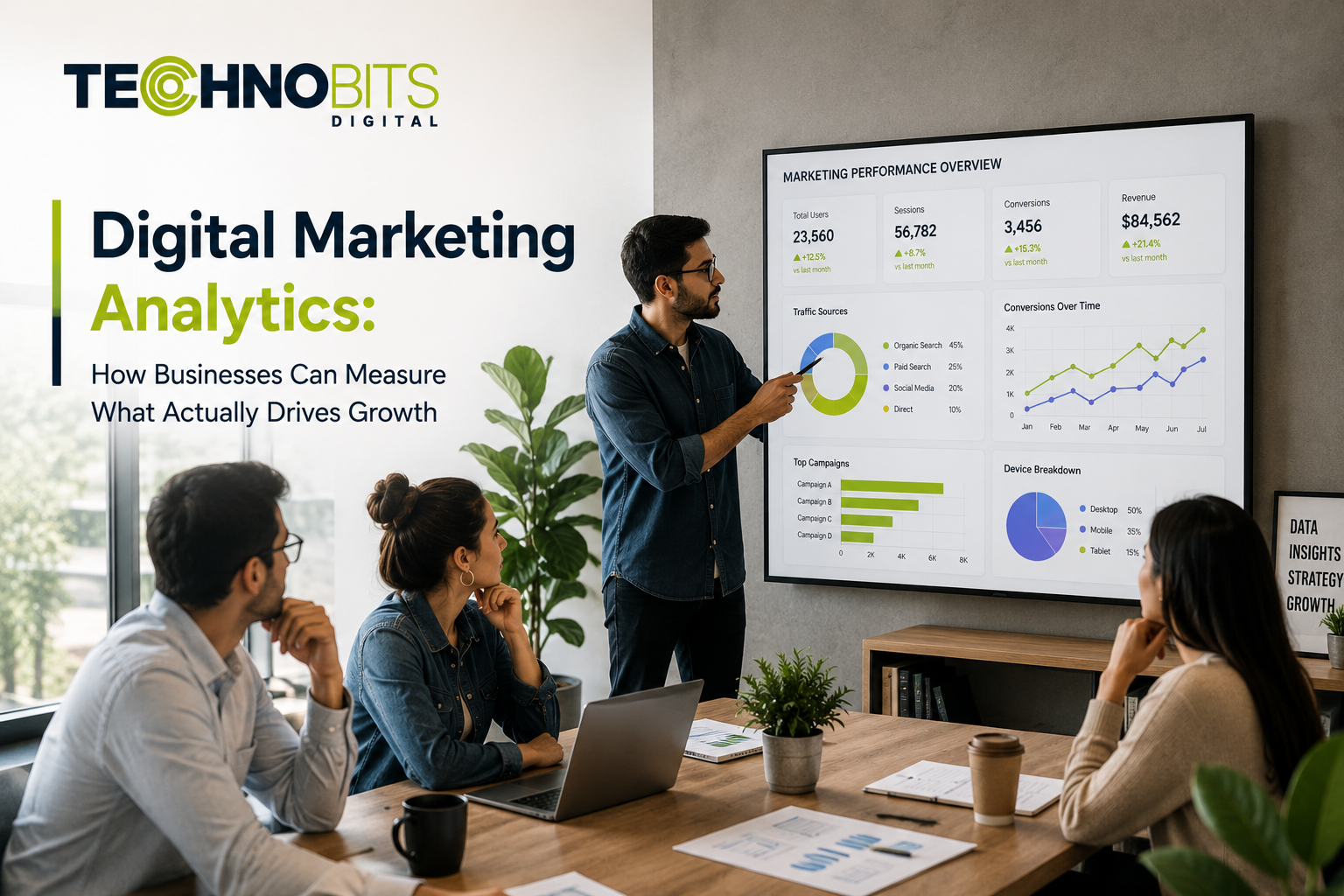
Digital marketing creates a large amount of data from websites, search engines, social media platforms, paid campaigns and customer interactions.
However, collecting data alone does not help businesses grow. The real value comes from understanding what the data means and using those insights to improve marketing decisions.
Digital marketing analytics helps businesses evaluate campaign performance, understand customer behaviour, measure marketing activities and identify areas where improvements can be made.
The objective is not simply tracking numbers. It is understanding which activities contribute to meaningful business outcomes.
What Is Digital Marketing Analytics?
Digital marketing analytics is the process of collecting, analysing and interpreting marketing data to understand performance and improve decision-making.
Businesses can use analytics to evaluate:
Website visitors
Search performance
Social media engagement
Advertising campaigns
Customer journeys
Lead generation activities
Conversion actions
Analytics helps answer important business questions:
Where are customers discovering the business?
Which campaigns attract relevant audiences?
Which pages receive the most engagement?
Where do potential customers leave the journey?
Which marketing activities require improvement?
Why Digital Marketing Analytics Matters for Businesses
Many businesses invest in:
SEO
Social media marketing
Paid advertising
Content marketing
Email campaigns
Without proper measurement, it can become difficult to understand which activities are creating valuable results.
Analytics provides businesses with visibility into:
Marketing performance
Audience behaviour
Campaign effectiveness
Customer interactions
Improvement opportunities
A data-driven approach helps businesses make decisions based on insights rather than assumptions.
Key Metrics Businesses Should Monitor
1. Website Performance Metrics
A website is often a central part of digital marketing activities.
Important website metrics may include:
Website traffic
Traffic sources
User engagement
Popular pages
Page performance
User journey behaviour
These insights can help businesses understand how visitors interact with their website.
2. Search Engine Performance Metrics
SEO analytics helps businesses understand how their website performs in search results.
Important areas include:
Organic traffic
Keyword visibility
Search impressions
Click-through rates
Landing page performance
Technical SEO issues
Search performance should be evaluated alongside business objectives rather than focusing only on rankings.
Technobits Digital provides SEO and analytics services focused on areas such as technical SEO audits, keyword strategy, content optimisation and search visibility improvements.
3. Social Media Marketing Analytics
Social media platforms provide valuable information about audience behaviour and content performance.
Businesses can analyse:
Content engagement
Audience interaction
Campaign performance
Reach and impressions
Paid campaign results
Analytics helps marketing teams understand what type of content connects with their audience.
Technobits Digital provides social media marketing services including strategy development, content development, community management and social PPC campaigns.
4. Paid Advertising Performance
Paid campaigns require continuous monitoring to understand performance.
Businesses may review:
Campaign reach
Click performance
Cost metrics
Audience targeting
Landing page behaviour
Lead quality
Paid advertising decisions should be based on campaign objectives and relevant business metrics.
From Data Collection to Business Decisions
Analytics becomes valuable when businesses turn information into action.
Examples:
Low Website Engagement
Possible actions:
Review page content
Improve user experience
Check website performance
Improve navigation
High Traffic but Low Enquiries
Possible actions:
Review conversion paths
Improve landing pages
Analyse customer intent
Test messaging
Strong Social Engagement but Low Business Impact
Possible actions:
Review campaign objectives
Improve audience targeting
Connect marketing activities with lead management
The purpose of analytics is not only reporting what happened but understanding what should happen next.
The Role of AI in Digital Marketing Analytics
AI is becoming part of modern marketing workflows by helping teams analyse larger amounts of information and identify patterns.
AI-assisted marketing analytics may support:
Data organisation
Audience analysis
Content performance insights
Campaign optimisation support
Reporting assistance
However, AI does not replace marketing strategy or human decision-making.
Businesses still need clear objectives, accurate data and experienced teams to interpret insights correctly.
Creating a Data-Driven Marketing Strategy
A successful analytics approach requires more than installing tracking tools.
Businesses should focus on:
Define Clear Goals
Before measuring performance, define what success means.
Examples:
Increasing qualified enquiries
Improving website engagement
Growing brand awareness
Improving campaign efficiency
Track Relevant Metrics
Not every metric is equally important.
Businesses should focus on measurements connected to their objectives instead of tracking numbers without purpose.
Review Data Regularly
Marketing performance changes over time.
Regular reviews help businesses identify:
New opportunities
Performance issues
Customer behaviour changes
Areas requiring improvement
Connect Marketing Channels
Businesses often use multiple digital channels:
Website
Search engines
Social media
Advertising platforms
CRM systems
Connecting information across these channels provides a clearer understanding of customer journeys.
Common Digital Marketing Analytics Mistakes
Measuring Only Traffic
High traffic does not always mean high-quality business opportunities.
Businesses should also consider engagement, enquiries and conversions.
Focusing Only on Vanity Metrics
Metrics such as likes, views or impressions can provide context but should not be the only measurement of success.
Ignoring Data Quality
Incorrect tracking or incomplete information can lead to inaccurate conclusions.
Businesses should regularly review:
Tracking setup
Data accuracy
Reporting configuration
Analytics implementation
Expecting Analytics to Guarantee Results
Analytics helps businesses make better decisions, but outcomes depend on many factors including market conditions, competition, customer behaviour and execution quality.
How Technobits Digital Supports Data-Driven Marketing
Technobits Digital helps businesses improve their digital presence through technology-driven marketing solutions.
Its digital marketing capabilities include:
SEO and analytics
Social media marketing strategy
Content development
Social PPC campaigns
Search visibility improvement
By combining marketing strategy, analytics and technology expertise, businesses can create a clearer understanding of their digital performance and identify opportunities for improvement.
Frequently Asked Questions
What is digital marketing analytics?
Digital marketing analytics is the process of collecting and analysing marketing data to understand performance and improve business decisions.
Why is analytics important for digital marketing?
Analytics helps businesses understand customer behaviour, evaluate campaigns and identify areas where marketing efforts can be improved.
Which digital marketing metrics should businesses track?
The right metrics depend on business goals. Common measurements include website performance, search visibility, campaign performance, engagement and conversions.
Can analytics guarantee better marketing results?
No. Analytics provides insights that support decision-making, but results depend on strategy, execution, market conditions and other business factors.
How often should businesses review marketing analytics?
The frequency depends on campaign activity and business needs. Active campaigns may require regular monitoring, while long-term strategies may be reviewed periodically.
Final Thoughts
Digital marketing success is not only about running campaigns. It is about understanding what happens after those campaigns reach customers.
Analytics helps businesses move from assumptions to informed decisions by showing how audiences interact with digital channels.
When combined with effective strategy, quality content and continuous improvement, digital marketing analytics becomes a valuable tool for building stronger online performance.
Want to understand what your digital marketing data is telling you? Contact Technobits Digital to discuss SEO, social media marketing, analytics and data-driven digital growth solutions.